

















The beginning of Israel-Palestine settlement in the region as two sects with distinct faiths is the root cause of the current tension. The issue was taken over by the British for their political gain against the Ottoman Empire, and thereby a secret alliance and agreement was made between the Arab Palestinians, France and Israel with certain promises for independent territories for the three. Perhaps the same offer was promised to all the three. The British had played triple role. Everybody knows that the conflict between Arabs and Jews over ownership of the Holy Land is rooted in the nationalism that grew among both the groups soon after the World War I and the collapse of the Ottoman Empire, which had ruled the territory for centuries.

At length, they openly supported Israel settlers and in order to strengthen the revolt, the British collaborated with the Jewish settler community and formed a British-led “counterinsurgency force” of Jewish fighters that was widely known as the Special Night Squads. In the revolt that was lasted for three years, 5,000 Palestinians were killed, 15,000 to 20,000 were wounded and 5,600 were imprisoned. The Jewish population had increased to 33 percent of Palestine by 1947 though they owned only 6 percent of the land. Then the United Nations adopted Resolution 181 with a view to divide Palestine into two separate states for the Arab and Jewish. It was called UN Partition Plan, but the Palestinians didn’t accept the plan, for it allotted about 56 percent of Palestine to the Jewish people and most of the fertile coastal region was also included for the Jewish state. Moreover, the Palestinians comprised 67 percent of its population.
By that time, Zionist paramilitaries were prepared for a military operation to destroy Palestinian towns and villages in order to expand the borders of the Zionist state, and due to the military operation more than 100 Palestinian men, women and children were killed in the village of Deir Yassin on the outskirts of Jerusalem in April 1948. It continued and consequently more than 500 Palestinian villages, towns and cities were destroyed during the period from 1947 to 1049, near about 15,000 Palestinians were killed. The Palestinians call the violence the Nakba, or “catastrophe” in Arabic because the incidence was beyond their tolerance and sufferings. It was a successful military operation of the Zionists as they could have conquered 78 percent of Palestine and the remaining 22 percent was divided into two provinces as the occupied West Bank and the besieged Gaza Strip.
Besides, an estimated 750,000 Palestinians were kicked out of their homes. Their descendants, now, live as six million refugees in 58 grubby and slummy camps throughout Palestine and in the neighbouring countries of Lebanon, Syria, Jordan and Egypt. It was a thrilling historic move of the Zionist Movement that led to the establishment of Israel on May 15, 1948. It had caused the first Arab-Israeli war that ended in January 1949 after an armistice between Israel and Egypt, Lebanon, Jordan and Syria. But in December 1948, the UN General Assembly passed Resolution 194 for the right of return for Palestinian refugees. According to the UN Partition Plan, the territory was divided into three parts such as the State of Israel, the West Bank, of the Jordan River, and the Gaza Strip.
Despite many tensions and conflicts between them, the Arab-Israeli War of 1948 broke out when five Arab nations invaded territory occupied by Jews following the announcement of the independence of the state of Israel on May 14, 1948. In 1947, and again on May 14, 1948, the United States offered de facto recognition of the Israeli Provisional Government. United States of America is the first country openly recognized the independent state of Israel.
After Israel declared its independence on May 14, 1948, the fighting intensified with other Arab forces joining the Palestinian Arabs in attacking Israel, and on the eve of May 14, the Arabs launched an air attack on Tel Aviv that was resisted by Israelis. Subsequently Lebanon, Syria, Iraq, and Egypt collectively invaded Israel. British trained forces from Transjordan eventually intervened in the conflict. But due to the intelligent move, Israel could have established their defeated the Arab armies and won the undeclared war.
At least 150,000 homeless Palestinians remained in the newly formed state of Israel and lived as captives under the Israeli military for about 20 years before they were eventually granted Israeli citizenship. In between Egypt took over the Gaza Strip, and in 1950, Jordan brought the West Bank under their administrative rule. The situation changed after a few years since a new organization named the Palestinian Liberation Organization (PLO) was formed in 1964, and a year later, the Fatah political party was established.
The PLO aimed at bringing various Palestinian groups together under one organization, according to which the Palestine National Council (PNC), the legislature of PLO, was composed of members from the civilian population of various Palestinian communities, and the Palestine National Charter described the goals of the organization.
The aim of PLO was declared as the complete elimination of Israeli sovereignty in Palestine and the destruction of the State of Israel. The PLO received financial aid from taxes levied on the salaries of Palestinian workers and the contributions of their supporting countries. But Israel occupied the remaining historic Palestine, including the Gaza Strip, the West Bank, East Jerusalem, the Syrian Golan Heights and the Egyptian Sinai Peninsula during the Six-Day War on June 5, 1967. It was called the Naksa which means “setback” in Arabic or the Six-Day War. Then as a new tactics, the Marxist-Leninist Popular Front for the Liberation of Palestine was formed in December 1967 and the leftist groups were engaged in a series of attacks and plane hijackings in order to draw the world’s attention to the plight of the Palestinians.
The PLO received wide recognition as the representative of the Palestinians only after the defeat of the Arab states by Israel in the Six-Day War of June 1967, and the leaders of Palestinian guerrilla factions gained representation in the Palestine National Council in 1968, and the influence of the more militant and independent-minded groups within the PLO increased.
More radical factions remained steadfast in their aims of the destruction of Israel and its replacement with a secular state in which Muslims, Jews, and Christians would, ostensibly, participate as equals. In the meanwhile moderate factions within the PLO had proved willing to accept a negotiated settlement with Israel that would yield a Palestinian state. From the late 1960s the PLO started organizing and launching guerrilla attacks against Israel from its bases in Jordan. By that time Yasser Arafat, leader of Fatah, became the PLO’s chairman in 1969.
Since the PLO was forcibly expelled from the country by the Jordanian army due to their conflict with the government of King Hussein of Jordan in 1970, and in 1971, the PLO shifted its bases to Lebanon and continued its attacks on Israel.
Yasser Arafat, then, advocated for putting an end to the PLO’s attacks on targets outside of Israel as he wanted to seek the world community’s acceptance of the PLO as the legitimate representative of the Palestinian people. Arafat received good acceptance and his decision was widely recognized as the Arab heads of state recognized the PLO as the sole legitimate representative of all Palestinians in 1974, and as a result the PLO was admitted to full membership in the Arab League in 1976.
In spite of it, the PLO was excluded from the negotiations between Egypt and Israel in the Camp David Peace Treaty. Consequently the Israeli-occupied Sinai Peninsula was returned to Egypt; also they but failed to win Israel’s agreement to the establishment of a Palestinian state in the occupied territories of the West Bank and Gaza Strip. The Palestinian National Council of the Palestine Liberation Organization met in Algeria on 15th November 1988 and adopted a declaration of independence and proclaimed an independent State of Palestine in Jerusalem, the West Bank and the Gaza Strip.
United Nations General Assembly Resolution 43/177 was adopted “acknowledging the proclamation of the State of Palestine by the Palestine National Council on 15 November 1988,” and it was also decided that “the designation ‘Palestine’ should be used in place of the designation ‘Palestine Liberation Organization’
The worse situations led to the formation of Hamas in 1987 under the leadership of Sheikh Ahmed Yassin, a Palestinian refugee living in Gaza as a Sunni-Islamist militant organization with its roots in the Palestinian branch of the Muslim Brotherhood. Hamas aims at eradicating the Jewish rule. The U.S. State Department has, therefore, designated Hamas a terrorist group in 1997. The European Union and other Western countries also consider it a terrorist organization.
However, Hamas won 2006 parliamentary elections and seized the control of the Gaza Strip from the Palestinian Authority in 2007. Subsequently Hamas received setbacks from Arab and Muslim countries, such as Qatar and Turkey. Recently, it’s moved closer to Iran and its allies. As everybody knows, the current Israeli-Palestine status quo began consequent to the Israeli military occupation of the West Bank and Gaza in the Six-Day War in 1967.
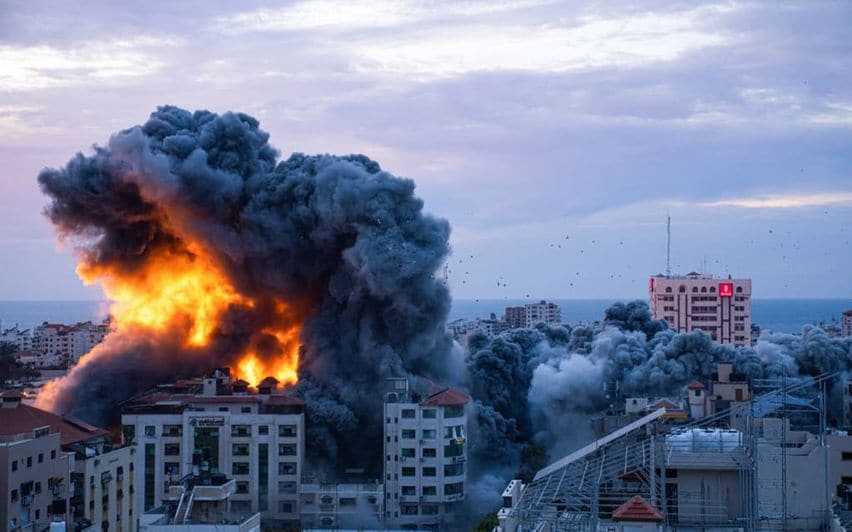
The Israeli-Palestinian conflict has claimed thousands of lives and displaced many millions of people. Israel declared war on the Gaza Strip after an unprecedented attack by Hamas. In reaction to the killing of 800 Israelis in southern Israel, Israel had launched a bombing campaign in the Gaza Strip and killed more than 500 Palestinians. The Israeli announcement of a “total blockade” of the Gaza Strip, stopping the supply of food, fuel and other essential commodities amount to a war crime under the International Law. Hamas has been controlling Gaza since 2006 when Hamas won the Palestinian Authority’s parliamentary elections. The victory of Hamas in the election gave Hamas, a political and militant movement under the inspiration of the Palestinian Muslim Brotherhood. Gaza is a small region on the Mediterranean Sea bordering Egypt to the south. It has been under the rule of the semi-autonomous Palestinian Authority since 1993.
In order to strengthen the revolt, the British collaborated with the Jewish settler community and formed a British-led “counterinsurgency force” of Jewish fighters that was widely known as the Special Night Squads. In the revolt that was lasted for three years, 5,000 Palestinians were killed, 15,000 to 20,000 were wounded and 5,600 were imprisoned. The Jewish population had increased to 33 percent of Palestine by 1947 though they owned only 6 percent of the land. Then the United Nations adopted Resolution 181 with a view to divide Palestine into two separate states for the Arab and Jewish. It was called UN Partition Plan, but the Palestinians didn’t accept the plan, for it allotted about 56 percent of Palestine to the Jewish people and most of the fertile coastal region was also included for the Jewish state. Moreover, the Palestinians comprised 67 percent of its population.
By that time, Zionist paramilitaries were prepared for a military operation to destroy Palestinian towns and villages in order to expand the borders of the Zionist state, and due to the military operation more than 100 Palestinian men, women and children were killed in the village of Deir Yassin on the outskirts of Jerusalem in April 1948. It continued and consequently more than 500 Palestinian villages, towns and cities were destroyed during the period from 1947 to 1049, near about 15,000 Palestinians were killed. The Palestinians call the violence the Nakba, or “catastrophe” in Arabic because the incidence was beyond their tolerance and sufferings. It was a successful military operation of the Zionists as they could have conquered 78 percent of Palestine and the remaining 22 percent was divided into two provinces as the occupied West Bank and the besieged Gaza Strip.
Besides, an estimated 750,000 Palestinians were kicked out of their homes. Their descendants, now, live as six million refugees in 58 grubby and slummy camps throughout Palestine and in the neighbouring countries of Lebanon, Syria, Jordan and Egypt. It was a thrilling historic move of the Zionist Movement that led to the establishment of Israel on May 15, 1948. It had caused the first Arab-Israeli war that ended in January 1949 after an armistice between Israel and Egypt, Lebanon, Jordan and Syria. But in December 1948, the UN General Assembly passed Resolution 194 for the right of return for Palestinian
refugees. According to the UN Partition Plan, the territory was divided into three parts such as the State of Israel, the West Bank, of the Jordan River, and the Gaza Strip.
At least 150,000 homeless Palestinians remained in the newly formed state of Israel and lived as captives under the Israeli military for about 20 years before they were eventually granted Israeli citizenship. In between Egypt took over the Gaza Strip, and in 1950, Jordan brought the West Bank under their administrative rule. The situation changed after a few years since a new organization named the Palestinian Liberation Organization (PLO) was formed in 1964, and a year later, the Fatah political party was established.
The PLO aimed at bringing various Palestinian groups together under one organization, according to which the Palestine National Council (PNC), the legislature of PLO, was composed of members from the civilian population of various Palestinian communities, and the Palestine National Charter described the goals of the organization.
The aim of PLO was declared as the complete elimination of Israeli sovereignty in Palestine and the destruction of the State of Israel. The PLO received financial aid from taxes levied on the salaries of Palestinian workers and the contributions of their supporting countries. But Israel occupied the remaining historic Palestine, including the Gaza Strip, the West Bank, East Jerusalem, the Syrian Golan Heights and the Egyptian Sinai Peninsula during the Six-Day War on June 5, 1967. It was called the Naksa which means “setback” in Arabic or the Six-Day War. Then as a new tactics, the Marxist-Leninist Popular Front for the Liberation of Palestine was formed in December 1967 and the leftist groups were engaged in a series of attacks and plane hijackings in order to draw the world’s attention to the plight of the Palestinians.
The PLO received wide recognition as the representative of the Palestinians only after the defeat of the Arab states by Israel in the Six-Day War of June 1967, and the leaders of Palestinian guerrilla factions gained representation in the Palestine National Council in 1968, and the influence of the more militant and independent-minded groups within the PLO increased.
More radical factions remained steadfast in their aims of the destruction of Israel and its replacement with a secular state in which Muslims, Jews, and Christians would, ostensibly, participate as equals. In the meanwhile moderate factions within the PLO had proved willing to accept a negotiated settlement with Israel that would yield a Palestinian state. From the late 1960s the PLO started organizing and launching guerrilla attacks against Israel from its bases in Jordan. By that time Yasser Arafat, leader of Fatah, became the PLO’s chairman in 1969.
Since the PLO was forcibly expelled from the country by the Jordanian army due to their conflict with the government of King Hussein of Jordan in 1970, and in 1971, the PLO shifted its bases to Lebanon and continued its attacks on Israel.
Yasser Arafat, then, advocated for putting an end to the PLO’s attacks on targets outside of Israel as he wanted to seek the world community’s acceptance of the PLO as the legitimate representative of the Palestinian people. Arafat received good acceptance and his decision was widely recognized as the Arab heads of state recognized the PLO as the sole legitimate representative of all Palestinians in 1974, and as a result the PLO was admitted to full membership in the Arab League in 1976.
In spite of it, the PLO was excluded from the negotiations between Egypt and Israel in the Camp David Peace Treaty. Consequently the Israeli-occupied Sinai Peninsula was returned to Egypt; also they but failed to win Israel’s agreement to the establishment of a Palestinian state in the occupied territories of the West Bank and Gaza Strip. The Palestinian National Council of the Palestine Liberation Organization met in Algeria on 15th November 1988 and adopted a declaration of independence and proclaimed an independent State of Palestine in Jerusalem, the West Bank and the Gaza Strip.
United Nations General Assembly Resolution 43/177 was adopted “acknowledging the proclamation of the State of Palestine by the Palestine National Council on 15 November 1988,” and it was also decided that “the designation ‘Palestine’ should be used in place of the designation ‘Palestine Liberation Organization’
The worse situations led to the formation of Hamas in 1987 under the leadership of Sheikh Ahmed Yassin, a Palestinian refugee living in Gaza as a Sunni-Islamist militant organization with its roots in the Palestinian branch of the Muslim Brotherhood. Hamas aims at eradicating the Jewish rule. The U.S. State Department has, therefore, designated Hamas a terrorist group in 1997. The European Union and other Western countries also consider it a terrorist organization.
However, Hamas won 2006 parliamentary elections and seized the control of the Gaza Strip from the Palestinian Authority in 2007. Subsequently Hamas received setbacks from Arab and Muslim countries, such as Qatar and Turkey. Recently, it’s moved closer to Iran and its allies. As everybody knows, the current Israeli-Palestine status quo began consequent to the Israeli military occupation of the West Bank and Gaza in the Six-Day War in 1967.
The Israeli-Palestinian conflict has claimed thousands of lives and displaced many millions of people. Israel declared war on the Gaza Strip after an unprecedented attack by Hamas. In reaction to the killing of 800 Israelis in southern Israel, Israel had launched a bombing campaign in the Gaza Strip and killed more than 500 Palestinians. The Israeli announcement of a “total blockade” of the Gaza Strip, stopping the supply of food, fuel and other essential commodities amount to a war crime under the International Law. Hamas has been controlling Gaza since 2006 when Hamas won the Palestinian Authority’s parliamentary elections. The victory of Hamas in the election gave Hamas, a political and militant movement under the inspiration of the Palestinian Muslim Brotherhood. Gaza is a small region on the Mediterranean Sea bordering Egypt to the south. It has been under the rule of the semi-autonomous Palestinian Authority since 1993.
ISRAEL-GAZA WAR CAUSING TERRIBLE DISASTERS
But the United States and European Union have not accepted Hamas’ electoral victory, for they are treated as a terrorist organization from the late 1990s. Subsequent to Hamas’ victory over Gaza, frequent violence has broken out between Hamas and Fatah. It was formerly the Palestinian National Liberation Movement. Fatah was formed as a Palestinian nationalist and social democratic political party. It is the largest faction of the confederated multi-party Palestine Liberation Organization (PLO) and the second-largest party in the Palestinian Legislative Council (PLC). Their ultimate goal is the complete liberation of Palestine. In between the Palestinian President Mahmoud Abbas of Fatah announced that Palestinians would no longer be bound by the territorial divisions created by the Oslo Accords.
The Oslo Accords are a pair of agreements between Israel and the Palestine Liberation Organization (PLO. The Oslo process began after secret negotiations in Oslo, Norway, resulting in both the recognition of Israel by the PLO and the recognition by Israel of the PLO as the representative of the Palestinian people and as a partner in bilateral negotiations. But the negotiations and all talks are found to be in vain due to frequent violations from both the sides. This being the situation, the role played by the American Political Bureaucracy under the then President Donald Trump in dealing with the Israel-Palestine issue is remarkable. In 2018, the US government canceled funding for the UN Relief and Works Agency by which Palestinian refugees were aided for their welfare and settlement.
So also the Trump administration relocated the U.S. embassy from Tel Aviv to Jerusalem. The decision of Donald Trump had pleased the Israeli leadership even if the Palestinian leaders and others in the Middle East and Europe were displeased with the decision. Israel always stands for the “complete and united Jerusalem” its capital, while Palestinians claim East Jerusalem as the capital of a future Palestinian state. In connection with the decisions taken by Donald Trump, the US released its long-awaited “Peace to Prosperity” plan in January 2020, but it was rejected by Palestinians because of its support for future Israeli annexation of settlements in the West Bank and control over an “undivided” Jerusalem that was never acceptable to Palestinians and the Arab world. Soon after that, in August and September 2020, Bahrain and the United Arab Emirates came forward with a proposal to agree to normalize relations with Israel, making them only the third and fourth countries in the region.
However, none of them was supported by the Palestinian leader Mahmoud Abbas of Fatah and Hamas. Subsequently in October 2020, an Israeli court ordered to evict several Palestinian families living in Sheikh Jarrah, a neighborhood in East Jerusalem and to hand over their land to Jewish families. Consequently, in late April 2021, Palestinians started demonstrating in the streets of Jerusalem to protest the evictions. The protest was intensified by May after the decision of a court in favor of the evictions. The Israeli police, then, deployed force against demonstrators that resulted in continuous demonstrations and violence that broke out at the al-Aqsa Mosque compound in Jerusalem, with Israeli police using stun grenades, rubber bullets, and water cannons that left hundreds of Palestinians wounded.
The violence continued, and by 21st May 2021, Israel and Hamas came together and agreed to a cease-fire, under the initiative and mediation of Egypt, with both sides claiming victory. It was reported that more than 250 Palestinians were killed and nearly 2,000 others wounded, and at least 13 Israelis were killed in the fighting that continued for eleven days. The United Nations estimated that more than 72,000 Palestinians were displaced by the fighting. Now, following the outbreak of war between Israel and Hamas on October 7, 2023, US President Joe Biden openly announced American support to Israel, and on the same day itself Israel declared war against the terrorist group, for Hamas has already been declared as a terrorist group by many of the countries in the European countries and the US.
Though the UN Security Council called an emergency meeting to discuss the outbreak of the war, the members failed to reach at a consensus statement. But on the contrary, many international groups expressed their concern for the safety of civilians in Israel and the Palestinian territories, especially for the safety of those being held hostage by militants in Gaza. Daily hundreds of innocent people including children and the aged are being killed from both the sides.
It is an admitted fact that Iranian intelligence and security forces have helped Hamas other extremist groups across the Middle East for the war against Israel. So also another extremist group with Iranian backing, Hezbollah, will soon be drawn into the war, in order to intensify the conflict beyond the territories of Israeli and Palestinian. Syria and Saudi Arabia also strongly advocate for the rights and protection of Palestinians Arab in Israel, the West Bank, and Gaza.
In the meanwhile Israeli Prime Minister Benjamin Netanyahu stands for the expansion and development of Israeli settlements in the occupied West Bank. The prioritization of the Zionist Group is to host all Jews to their home land. Hence the expansion of their territory is inevitably demanded for occupying the home comers. A everybody knows, the ultimate goal of Israel is to eradicate Hamas from the soil of Gaza and bring the region under the direct control of Israel for their permanent occupation. As such the October 2023 war between Israel and Hamas is marked as the most significant escalation of the ongoing conflict between Israel and Palestine for several decades.
The tension and conflict will continue in the region as an ongoing conflict between the two forces till the entire holy land comes under the rule of one of them, either Israel or Palestine. It can be deemed to be the fulfilment of the Great Promise described in the Holy Text.